Shipping container modifications — what is safe to cut and what is not
Doors, windows, roller doors, lining, insulation, power and shelving: what can safely be cut into a shipping container, what carries load, and when to buy new.
Guide · 9 min read
A used container is a good buy and an easy one to get wrong, because the faults that cost real money are the least visible and the faults that look alarming often cost nothing. Inspect in the right order and you will know inside ten minutes whether a unit is worth having.
Most people walk up to a used container and start at the doors, because the doors are the bit facing them. That is the wrong end to start. Inspect in descending order of repair cost, so that if you find a deal-breaker you stop early instead of spending twenty minutes admiring paintwork on a unit you are not going to buy.
The order is floor, then doors and locking bars, then roof, then corner castings and rails. Everything else is detail.
The floor is marine-grade plywood — usually 28mm — bolted down to steel cross members. It is the most expensive part of a container to replace and the part most likely to have been quietly damaged.
Walk the whole length of it. Do not stroll — put weight through your heel every metre or so, especially along the centre line and in the last metre or two at the door end where water gets in. You are feeling for give. Sound ply is hard and dead underfoot. Ply that has taken water flexes, and it often sounds different too.
Look for these:
Then look up. Get inside, pull the doors to behind you, and give your eyes half a minute to adjust. Any daylight you can see through the roof, the walls or around the door frame is a hole, and any hole in the roof will drip on whatever sits under it. This one trick answers more questions than any other single check.
The doors are the only moving part on the container, and they are where the weather gets in.
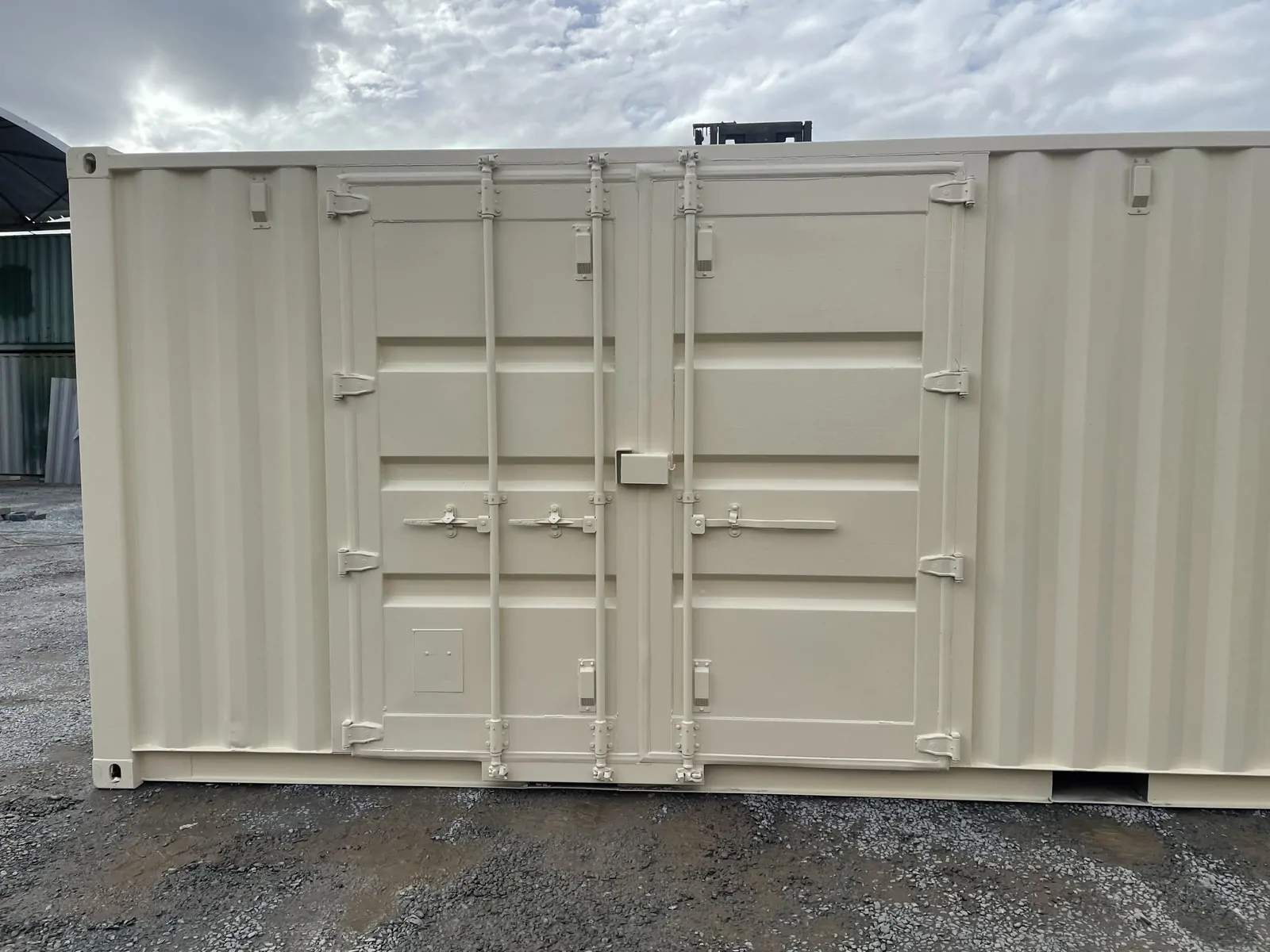
Open both doors fully and swing them right back to the side of the unit. They should move without a fight. Then close them and work the locking bars. All four bars on each door should turn through their full travel with hand pressure and the cams should drop into the keepers top and bottom. If a bar needs a length of pipe to move, something is wrong — either the bar is seized, or the container is out of square.
Squareness is worth understanding, because it is the fault most often blamed on the doors. If a unit has been racked in handling or has sat on uneven ground, the door frame is no longer a true rectangle and the doors will never seat properly no matter what you do to the hardware. Stand back at the door end and sight the frame. If the doors close at the top and gap at the bottom, or one door has to be forced past the other, suspect the frame rather than the door.
Run a hand around the gaskets. They should be supple and springy. Gaskets that have gone hard, cracked or flattened will not seal, and they let water in along the bottom of the door where you will not see it until something is wet. Gaskets are replaceable and not expensive, so this is a negotiating point rather than a walk-away.
Check the hinges and hinge pins for heavy rust and for any sign a hinge lug has been welded back on. Check the door handles and the retainers. And check the header — the horizontal member above the doors — because a forklift strike there is common and it distorts the whole opening.
You need to look at the roof, not glance along it from ground level. Get up on something safe and look across it at a low angle so the light shows you the shape.
Container roofs are thin corrugated steel and they are not designed to be walked on or to carry ponded water. What you are checking for:
The daylight test from inside is the fastest check here too, but do it on a bright day and give your eyes time.
These are the container's skeleton. The four corner posts, the top and bottom rails and the eight corner castings carry the entire load — the weight of the box, the weight of what is in it, and the forces of lifting and stacking. The wall and roof panels carry very little.
Check all eight castings for cracks around the openings, for heavy corrosion, and for any sign one has been rewelded. Check where each casting meets the rails and the posts. Look along the bottom rails for rot-through, which is common because that is where water and dirt collect, and along the top rails for distortion from being struck by a spreader.
A container with a compromised casting or a badly corroded bottom rail cannot be safely lifted, which is a problem the day you want to move it even if it stands perfectly well where it is. Our container inspection page covers what we look at before a unit goes out.
| What you see | What it means |
|---|---|
| Dents in side and end panels | Cosmetic. Normal on any used unit. |
| Surface rust, flaking paint, old logos | Cosmetic. Wire brush and paint if it bothers you. |
| Rust bubbling with soft steel under it | Not cosmetic. Perforation is coming or already there. |
| Stained but hard floor | Usually cosmetic. |
| Spongy or lifting floor | Not cosmetic. Expensive. |
| Hard, cracked door gaskets | Fixable and cheap. Raise it. |
| Doors that need force to close | Often a racked frame. Walk away or price it accordingly. |
| Welded, ground and painted roof patch | Acceptable repair. |
| Silicone or tape on the roof | Not a repair. Treat the unit as not watertight. |
| Cracked or rewelded corner casting | Walk away. |
Every container built to the international standard carries a unique identifier — four letters then seven digits — stencilled on the doors, the sides and the roof. The first three letters are the owner code, the fourth is almost always U for freight container, then six digits and a check digit. The number should match everywhere it appears on the unit. A number that has been painted out and restencilled is worth a question.
The CSC plate — sometimes called the safety approval plate — is a metal plate riveted to the left-hand door. It carries the approval reference, the date of manufacture, the maximum gross weight, the allowable stacking weight and the racking test load. Two things on it are useful to you as a buyer.
First, the date of manufacture tells you the container's age. Most units leave sea service somewhere between ten and fifteen years old, so a manufacture date well beyond that on a unit being sold as sound is worth asking about.
Second, the plate carries the next examination date under whichever inspection scheme the container was on. Once that has lapsed the box is no longer certified for sea freight — which does not matter at all if it is going to sit in a paddock, and matters entirely if you intend to ship in it. If your container needs to travel loaded on a ship, say so up front, because that is a different unit and a different conversation.
Plenty of containers are bought sight unseen and that is fine, provided you get the specifics rather than a stock photo. Ask for photographs of the actual unit — we will send them on request and before delivery — and ask for the door end, the interior with the doors shut, the roof, and the bottom rails.
If you would rather look for yourself, our yard at Forest Hill is on hardstand and you are welcome to walk in and inspect the exact unit. Ring first on 0477 410 500 so the container you want to see is accessible.
Before you settle on a grade, read the container grades page — most disappointment with a used container traces back to buying a grade that was never going to do the job. And if the unit only has to stand for a defined stretch of time, hire avoids the inspection question altogether.
More guides
Doors, windows, roller doors, lining, insulation, power and shelving: what can safely be cut into a shipping container, what carries load, and when to buy new.
How to secure a shipping container properly: lock boxes, the right padlock, where to point the doors, lighting and sight lines, and a realistic view of risk.
When shipping container hire makes sense and when buying does, how to find your own break-even, what to check in a hire agreement, and the cost of moving one.
Get a price
Ring us — 0477 410 500 — or send it through. Every enquiry answered within one business day.
Or skip the form and ring us — 0477 410 500, Mon–Fri 7:30am–5pm, Sat 8am–12pm