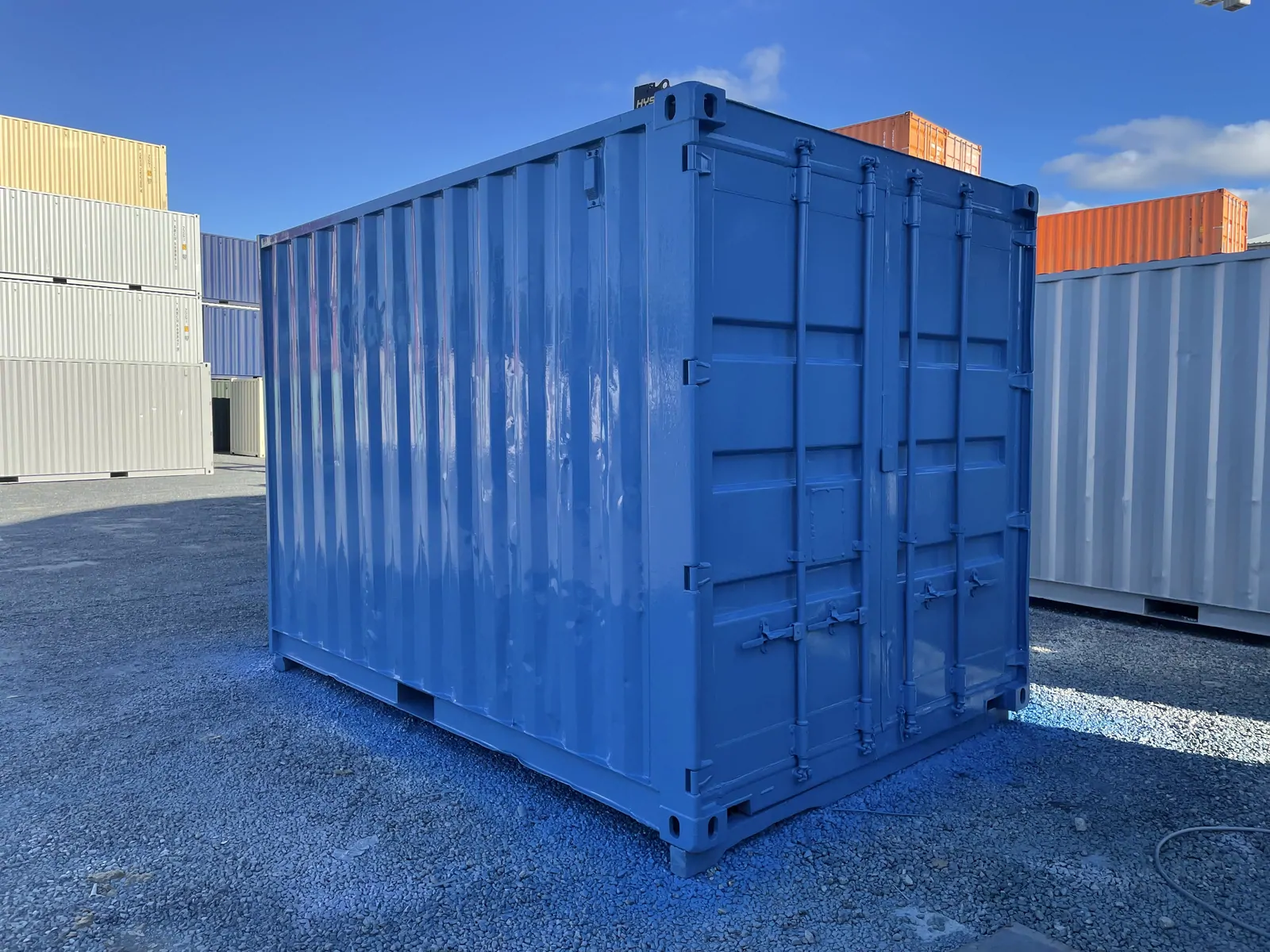
 10ft
10ft10ft Shipping Containers
The side passage is narrow, the council setback leaves you nothing to play with, or all you need is somewhere lockable for a mower, a compressor and a rack of tools.
Used from$4,350
New from$6,400
Reference
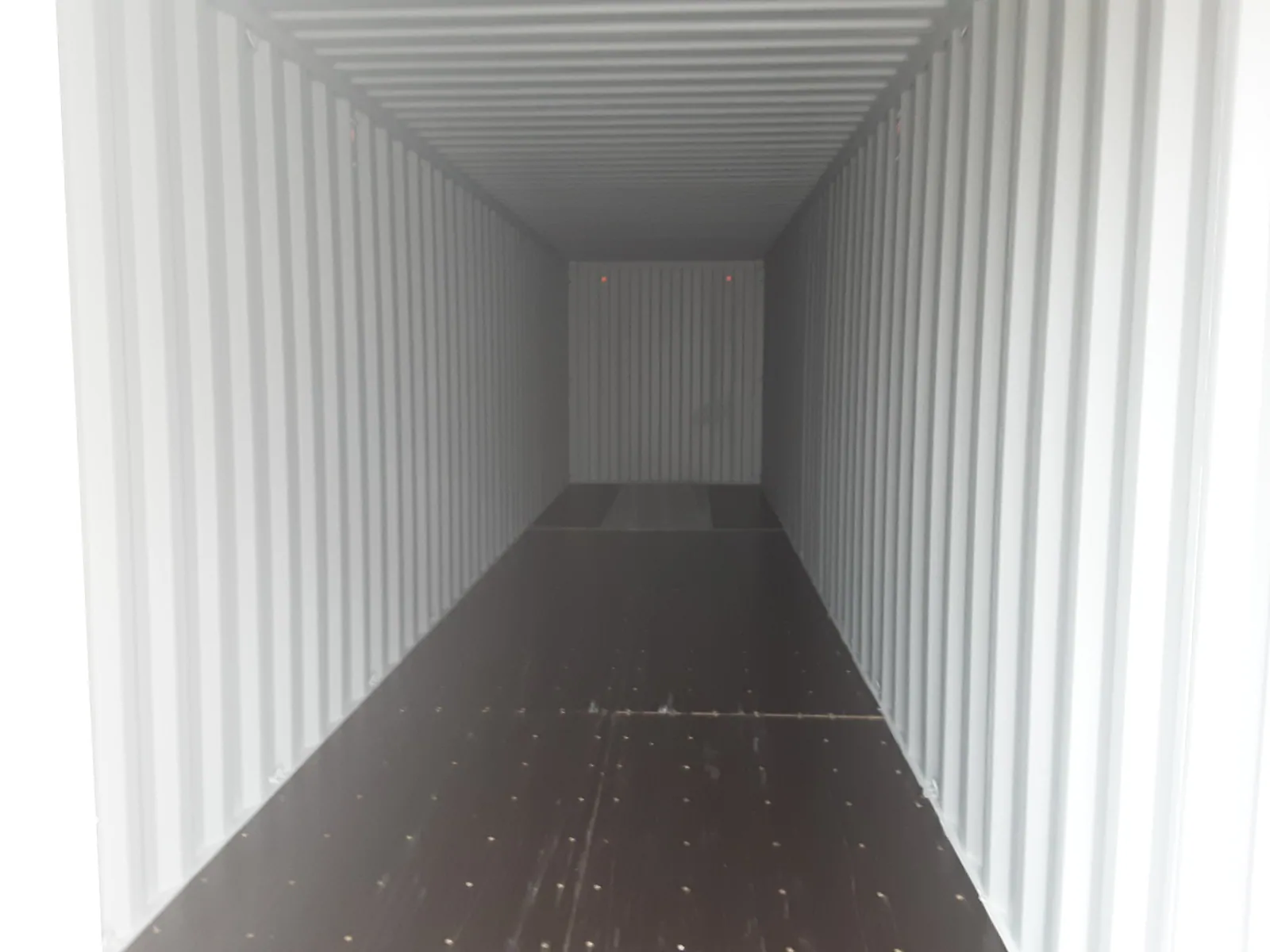
Every standard size, external and internal, with door openings, volumes and tare weights. These are ISO figures and they do not vary meaningfully between manufacturers.
| Container | External L × W × H | Internal L × W × H | Door W × H | Volume | Tare |
|---|---|---|---|---|---|
| 10ft | 2.99m × 2.44m × 2.59m | 2.83m × 2.35m × 2.39m | 2.34m × 2.28m | 15.9m³ | approx 1,300 kg |
| 20ft | 6.06m × 2.44m × 2.59m | 5.90m × 2.35m × 2.39m | 2.34m × 2.28m | 33.2m³ | approx 2,200 kg |
| 40ft | 12.19m × 2.44m × 2.59m | 12.03m × 2.35m × 2.39m | 2.34m × 2.28m | 67.7m³ | approx 3,800 kg |
| 20ft High Cube | 6.06m × 2.44m × 2.90m | 5.90m × 2.35m × 2.70m | 2.34m × 2.58m | 37.4m³ | approx 2,350 kg |
| 40ft High Cube | 12.19m × 2.44m × 2.90m | 12.03m × 2.35m × 2.70m | 2.34m × 2.58m | 76.4m³ | approx 3,900 kg |
Width never changes. Every ISO container is 2.44m externally and about 2.35m internally, whatever its length or height. That is why they stack, why they mate and why a 10ft and a 40ft take the same width of ground.
Height changes by exactly one foot. Standard 2.59m, high cube 2.90m. Internally that is 2.39m against 2.70m. Everything about whether you can line it, fit a roller door or stand comfortably under a mezzanine hangs on that 300mm.
Internal length is always a little less than the name. A 20ft is 6.06m outside and 5.90m inside. A 40ft is 12.19m outside and 12.03m inside. If you are working to something that has to fit exactly, work from the internal figure and leave yourself room to get it in through a 2.34m door.
The container's dimensions are not what decides whether it can be delivered. A 20ft is six metres long and needs roughly twenty metres of straight run-in for a tilt-tray to slide it off. A 40ft is twelve metres long and needs closer to thirty. Add headroom for the tray to lift, and width at the narrowest point rather than the average. Those figures are on the delivery page.
By size
10ftThe side passage is narrow, the council setback leaves you nothing to play with, or all you need is somewhere lockable for a mower, a compressor and a rack of tools.
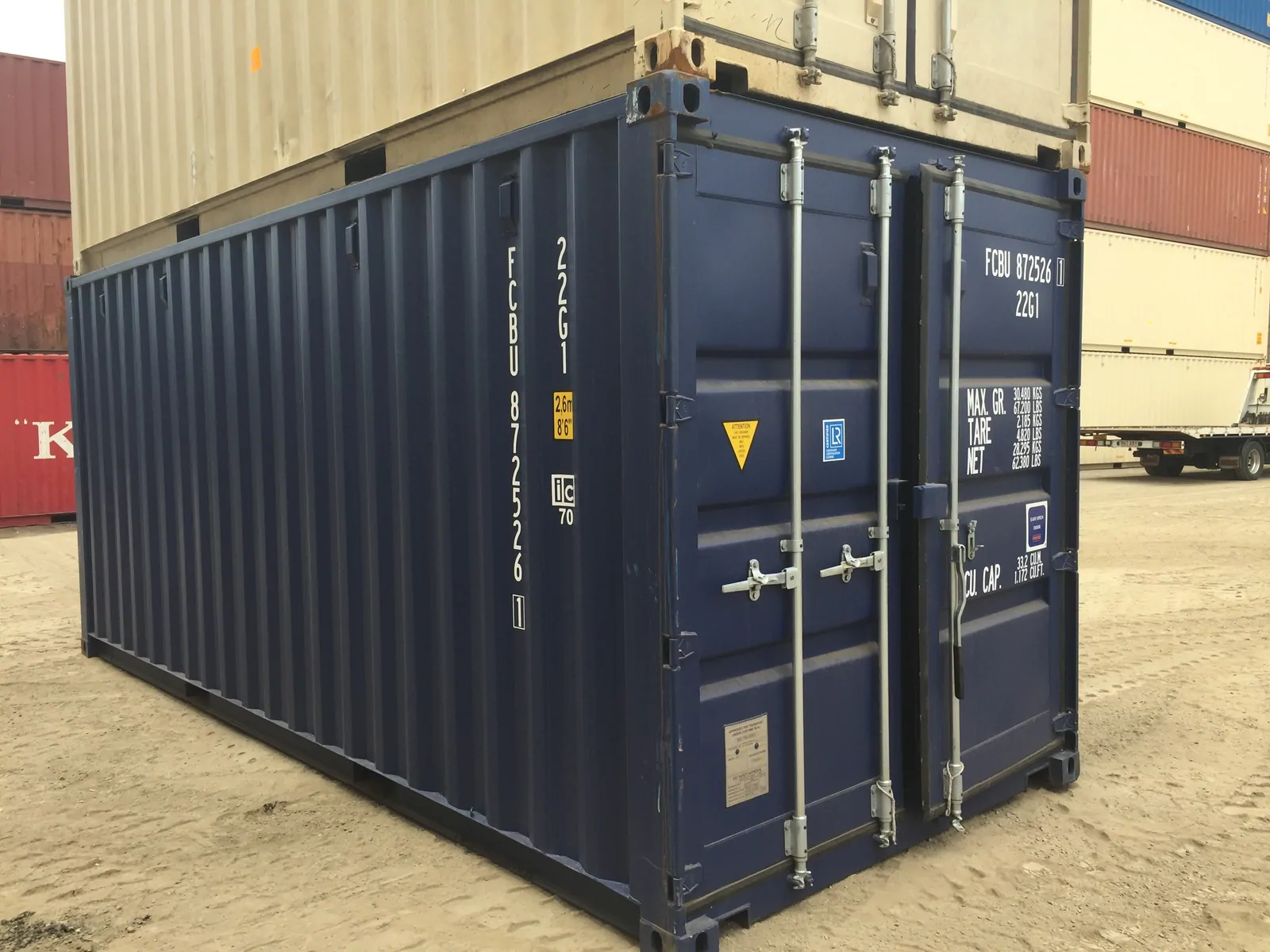 20ft
20ftYou have about seven metres of straight, reasonably level ground to put it on and you would rather not find out in six months that you should have gone bigger.
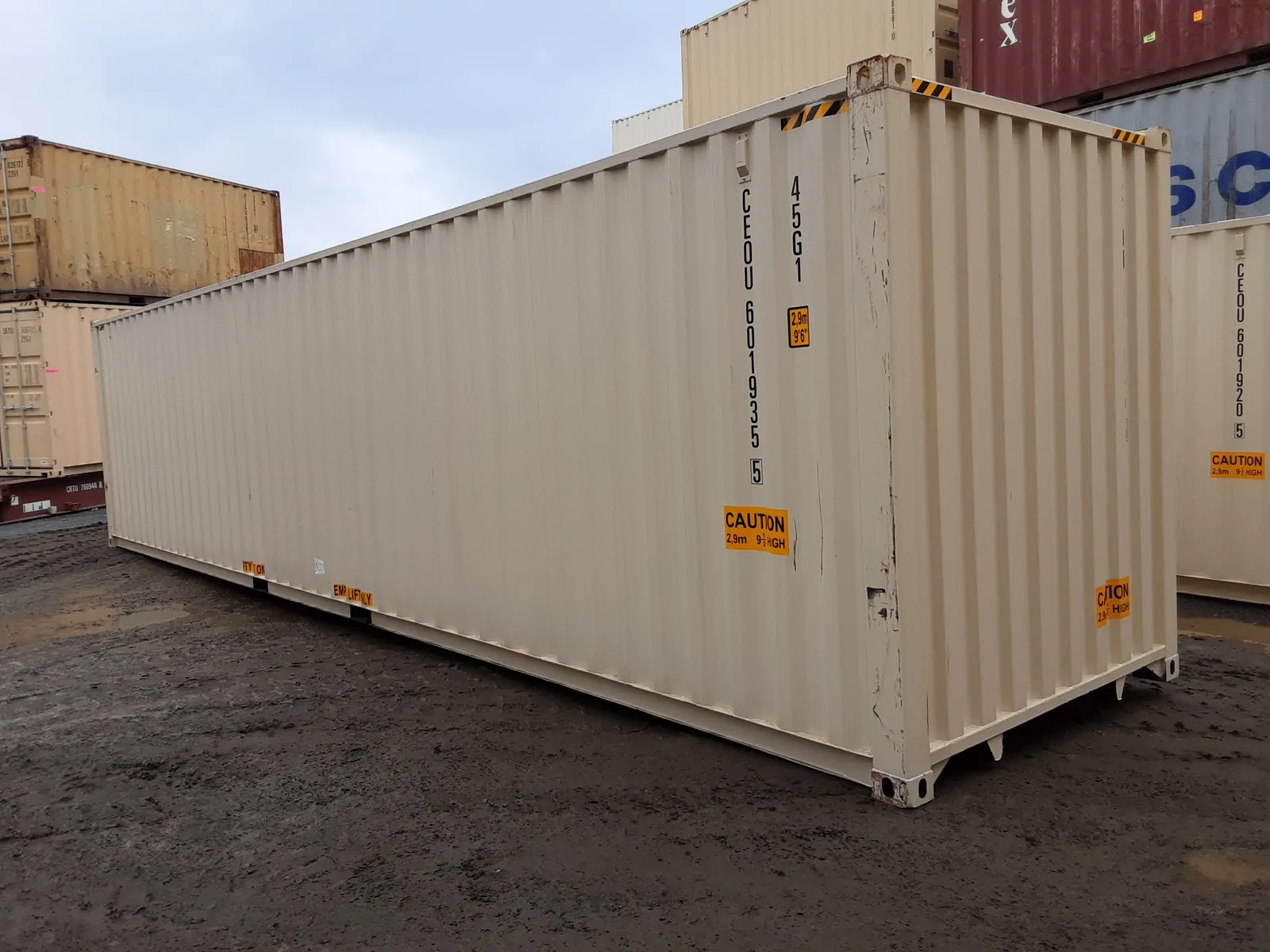 40ft
40ftYou have the room, the access is genuinely open, and you want the most storage per dollar available anywhere.
Common questions
2.44 metres externally and about 2.35 metres internally, for every ISO container regardless of length or height. Width is the one dimension that does not change — a 10ft, a 20ft and a 40ft are all the same width, which is why they stack and mate the way they do. The internal figure is what matters when you are working out whether a pallet fits.
A standard container is 2.59 metres externally and about 2.39 metres internally. A high cube is 2.90 metres externally and about 2.70 metres internally — 300mm more. That extra foot is what makes a high cube the one to buy if the container is going to be lined, fitted with a roller door or converted.
Roughly 1,300 kg for a 10ft, 2,200 kg for a 20ft and 3,800 kg for a 40ft, give or take with construction. That is tare weight — the container empty. It matters for two reasons: it decides which truck delivers it, and it is what the ground under the four corner castings has to carry.
As a working rule, about 10 standard Australian pallets in a 20ft and about 21 in a 40ft, loaded in a single layer. It varies with pallet size and how tightly you can load, and stacking changes it entirely. If you are working to a pallet count, tell us — it is often the thing that decides between a 20ft and a 40ft.
Get a price
Tell us what is going in it and how much room you have. Every enquiry answered within one business day.
Or skip the form and ring us — 0477 410 500, Mon–Fri 7:30am–5pm, Sat 8am–12pm