Shipping container modifications — what is safe to cut and what is not
Doors, windows, roller doors, lining, insulation, power and shelving: what can safely be cut into a shipping container, what carries load, and when to buy new.
Guide · 9 min read
People buy a container to keep things dry and then find water dripping off the ceiling onto boxes that were packed bone dry. The roof is sound. Nothing is leaking. The water came out of the air inside, and it is the single most common reason stored goods get ruined in an otherwise perfect container.
Warm air holds more water vapour than cold air. When warm, moist air touches a surface that is below its dew point, the vapour turns back into liquid on that surface. That is condensation, and everyone understands it on the outside of a cold glass.
A shipping container is an uninsulated steel box in the open. The steel roof and walls follow the outside temperature almost instantly, because thin steel has almost no thermal mass and no insulating value at all. Through a clear Australian night the roof radiates heat to the sky and can drop several degrees below the air temperature around it. The air inside the container, meanwhile, is still carrying the moisture it picked up during the day.
The result: at some point in the small hours, the underside of the roof falls below the dew point of the air inside and water forms across the whole ceiling. Enough of it and it beads, runs and drips. That is container rain, and it lands evenly over everything, which is why it does so much more damage than a leak.
The season that catches people out is not summer. It is the shoulder — clear cool nights following warm humid days. Coastal sites, sites near a river, sites in a hollow where cold air pools, and containers standing on grass or damp ground are all worse.
Three things make condensation a bigger problem in a container than in a shed.
It is sealed. A good container is close to airtight when shut. That is the point of it, and it is also the problem: whatever moisture is in there has nowhere to go, so it cycles between the air and the surfaces night after night rather than drying out.
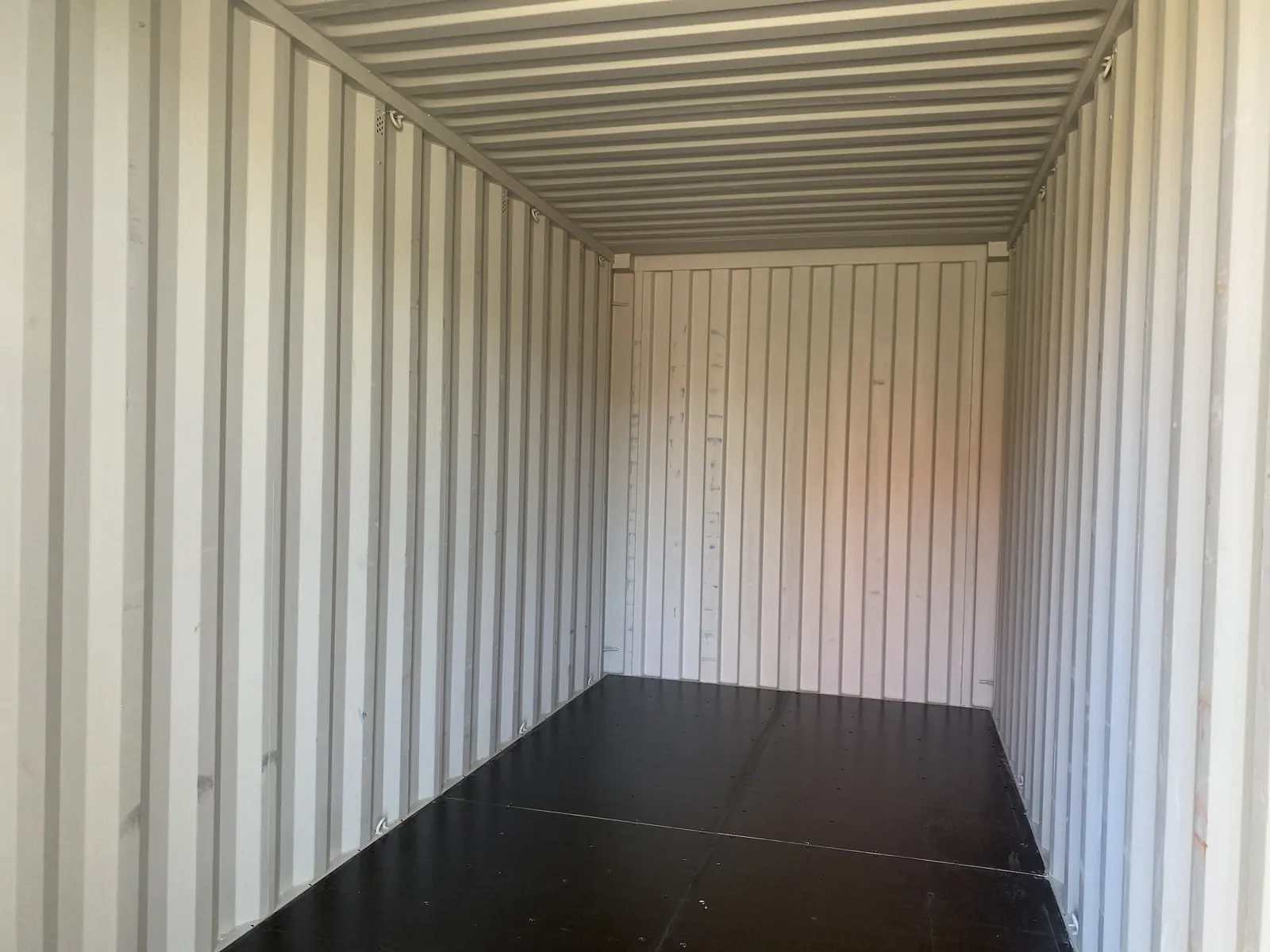
The ceiling is the coldest surface. In a shed, condensation forms on the underside of the roof sheets and mostly runs to the eaves. In a container the ceiling is flat, corrugated and directly above everything you own, and the corrugations channel water into runs that drip in the same places.
You load the moisture in yourself. This is the part people miss entirely. Damp cardboard, a lawnmower that was washed last week, firewood, a canvas tent, hay, unsealed timber, a concrete floor that is still curing, even the ground under the container — all of it releases water vapour into a sealed space. A pallet of dry-looking timber can carry many litres of water. It comes out over the following weeks and it has nowhere to go but onto your ceiling and back down.
Note that none of this is a fault in the container, which is why it catches people out. A unit checked wind and watertight before it left the yard will still sweat if the air inside it has water in it and the roof gets cold.
Ventilation is the first and cheapest answer, and it works by letting the moist air out before it can condense.
Every general purpose container comes with passive vents in the upper side panels. They are there to prevent pressure build-up in transit, not to manage a stationary container in an Australian climate, and on their own they are not enough for anything moisture-sensitive.
What helps, roughly in order of effort:
Ventilation has a limit worth understanding: it only helps while the air outside is drier than the air inside. On a humid coastal night, ventilating brings in wet air. That is why ventilation is usually paired with one of the other two fixes rather than relied on alone.
Insulation attacks the problem from the other end. If the inner surface never falls below the dew point, water never forms on it.
The critical detail is that the insulation must be bonded to the steel with no air gap behind it. If air can circulate between the insulation and the steel, condensation simply forms behind the lining where you cannot see it, drips into the wall cavity and rots the container from inside. This is the single most common mistake in container fit-outs.
Insulating is a modification, and modifying is easier and better on a square unit with straight walls. If a fit-out is part of the plan, that is a strong argument for a better grade to start with — see the container grades page.
Desiccant removes water from the air inside the sealed space. It is what the shipping industry uses on containers full of cargo that cannot get wet.
Consumer moisture absorbers from the hardware store will take the edge off a small container with dry contents. Commercial container desiccant — usually calcium chloride in hanging bags or poles — has far greater capacity and is designed to be hung from the lashing rings so the liquid it collects stays contained rather than pooling on your floor.
Desiccant is a maintenance item, not a fix you install and forget. Bags saturate and stop working, and a saturated bag left hanging is just a container of water. Allow for checking them, and understand that if you are opening the doors weekly you are resetting the humidity anyway and the desiccant is doing very little.
Desiccant works best in a genuinely sealed, undisturbed container, and it works badly in one that is ventilated or opened often. Pick one strategy, not both.
The cheapest condensation control is not putting the water in there in the first place.
Some things will not survive a full season in a bare steel box no matter what you do short of a proper fit-out.
If the contents genuinely cannot get damp, the honest answer is a ventilated and insulated unit, not a bare one with a bag hanging in it.
Where it stands changes how hard it sweats. A container on gravel or hardstand with airflow underneath sweats less than one sitting on grass or damp soil, because the ground itself is a moisture source. Some shade over the roof reduces the day-night temperature swing that drives the whole cycle. Getting it off the ground on pads is worth doing anyway for the sake of the bottom rails, and it helps here as well.
A container standing dead level with a slight fall towards the doors also means condensate that does reach the floor runs out rather than sitting at the closed end.
For most people the sensible sequence is: load dry, get things off the floor, leave air gaps, and open the doors when you can. If that is not enough, or nobody is on site regularly, add through-ventilation. If the contents matter, insulate the ceiling. Desiccant is for sealed units that are rarely opened.
If you tell us what you are storing and where the container will stand, we can tell you which of these is worth doing before delivery rather than after. Ring 0477 410 500, or ask through the contact page. Common questions are answered on the FAQs page, and the general purpose range lists what comes standard.
More guides
Doors, windows, roller doors, lining, insulation, power and shelving: what can safely be cut into a shipping container, what carries load, and when to buy new.
How to secure a shipping container properly: lock boxes, the right padlock, where to point the doors, lighting and sight lines, and a realistic view of risk.
When shipping container hire makes sense and when buying does, how to find your own break-even, what to check in a hire agreement, and the cost of moving one.
Get a price
Ring us — 0477 410 500 — or send it through. Every enquiry answered within one business day.
Or skip the form and ring us — 0477 410 500, Mon–Fri 7:30am–5pm, Sat 8am–12pm